G.L.A INVEST RESEARCH – The Infinite Innovation Newsletter- PRE-IPO WEEKLY

PRE-IPO SPOTLIGHT: LIGHTMATTER
Lightmatter is a private AI infrastructure company building photonic chips and interconnects that use light instead of electricity to move data and perform some of the core math behind artificial intelligence workloads. In simple terms, the company is trying to make AI data centers faster, cooler, and more energy efficient at a time when conventional electrical systems are hitting bandwidth and power limits.

The Business in Lehman’s Terms
A useful way to think about Lightmatter is that today’s AI systems increasingly resemble traffic jams inside data centers: chips are powerful, but moving all the information between them is slow, expensive, and extremely power hungry. Lightmatter’s answer is to replace more of that electrical “wiring” with optical pathways, allowing data to travel as light, which can move more information with less heat and lower energy consumption.
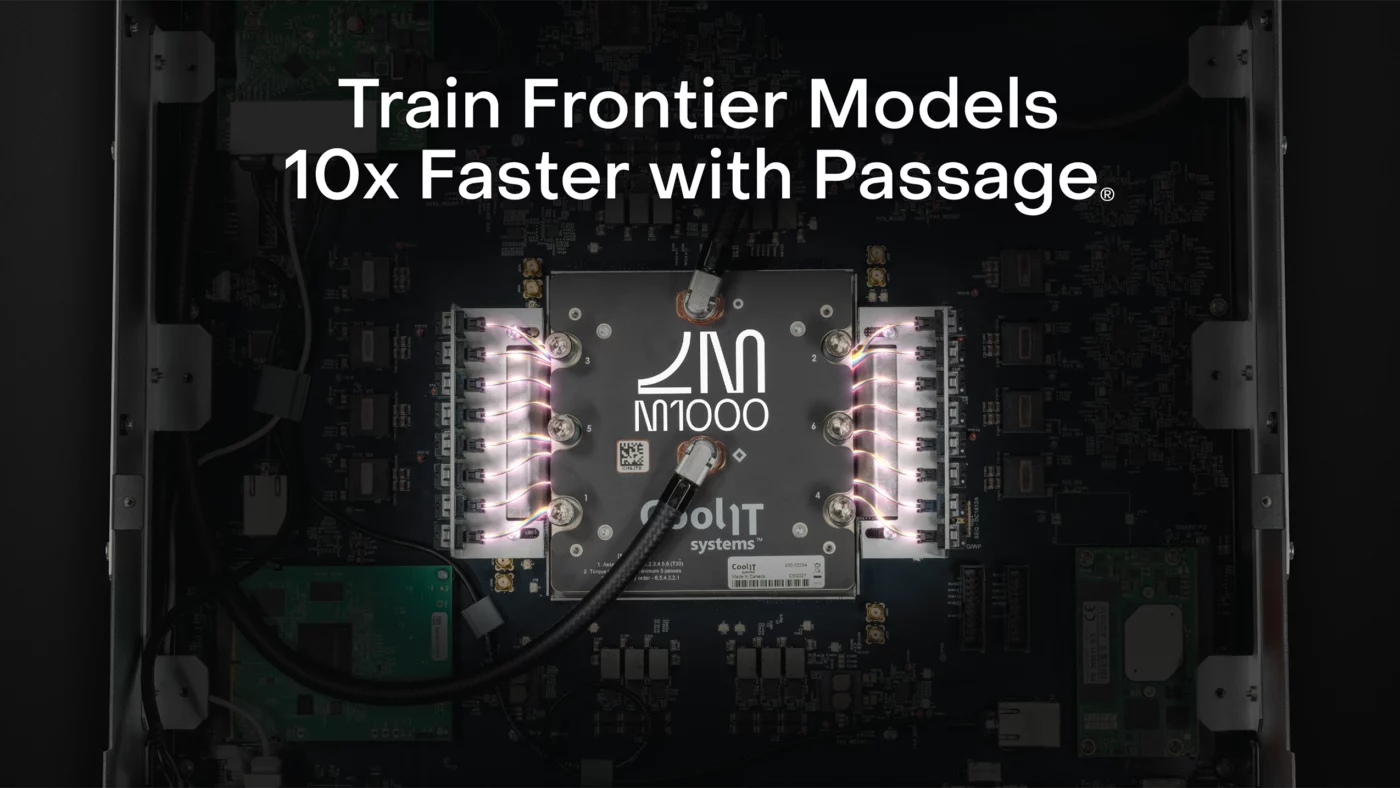
The company’s product family is built around three layers. Passage is the photonic interconnect platform that helps chips communicate at far higher bandwidth and lower power. Envise is the photonic accelerator that uses light for matrix multiplications, one of the most important workloads in AI training and inference. Idiom is the software layer that helps map AI workloads to this hardware stack.
For non-technical investors, the simplest framing is this: Lightmatter is not trying to replace every chip in the data center; it is targeting the parts of AI infrastructure where conventional electronics are becoming bottlenecks, especially data movement and power efficiency.

What Problems Lightmatter Solves
The first problem is bandwidth. As AI clusters scale from hundreds of accelerators to thousands or even more, the amount of data moving between processors becomes enormous, and copper-based electrical links become increasingly inefficient. Lightmatter’s photonic interconnect products are designed to relieve this congestion and enable much larger high-performance AI systems.
The second problem is energy and heat. AI data centers now face severe power constraints because model training and inference require massive compute density. By using light-based communication and photonic compute elements, Lightmatter aims to reduce power draw per unit of performance and lower the operating cost of large AI clusters.
The third problem is scaling. Even when hyperscalers can buy enough GPUs, they still face architectural limits in how efficiently those systems connect and operate together. Lightmatter’s pitch is that photonics can become a foundational layer for next-generation AI factories by allowing much denser, faster, and lower-latency chip-to-chip communication.

Founders and Leadership
Lightmatter was founded in 2017 by MIT alumni Nicholas Harris, Darius Bunandar, and Thomas Graham. Harris, the CEO, holds a PhD in photonics from MIT and previously worked in research and development roles tied to advanced semiconductor and photonics work. Bunandar, the company’s chief scientist, earned a PhD in physics from MIT focused on nanophotonic circuits and quantum communications, which is directly relevant to the company’s technical corer Graham helped shape the machine-learning and systems side of the business, making the founding trio unusually well matched across photonics, computing, and AI applications.
The broader team also appears to have matured from a research-heavy startup into a commercialization-oriented organization with expertise in silicon photonics, high-speed SerDes, advanced packaging, and AI systems architecture. That matters because Lightmatter’s success will depend not just on novel physics, but on shipping manufacturable products into production data centers.
Notable Backers and Investors
Lightmatter has attracted a strong late-stage investor syndicate, which is one of the clearest indicators that institutional capital sees the company as a serious AI infrastructure contender. Its disclosed backers include T. Rowe Price, Fidelity, GV, Matrix Partners, Spark Capital, Viking Global, Aliya Capital Partners, Hewlett Packard Enterprise, and Lockheed Martin’s investment arm.
That investor list matters strategically. T. Rowe Price and Fidelity often appear in companies preparing for eventual public-market readiness, while HPE and Lockheed suggest relevance to large-scale compute systems and potential government or defense-adjacent applications. For investors focused on innovation and strategic technologies, the presence of both institutional crossover investors and industrial backers strengthens the credibility of the Lightmatter story.

Market Size and TAM
Lightmatter’s addressable market sits inside the broader AI infrastructure buildout, especially high-speed interconnects, photonic networking, co-packaged optics, and energy-efficient AI compute. As hyperscalers, sovereign AI projects, enterprises, and defense-related compute operators build larger AI clusters, the market for bandwidth-efficient and power-efficient infrastructure expands alongside GPU spending.
While Lightmatter has not publicly disclosed a single definitive TAM figure in the sources reviewed, the practical market opportunity is best understood as a slice of the multi-tens-of-billions-dollar AI data center hardware and optical interconnect stack. If photonics becomes standard for large-scale AI clusters, the company could participate in a large recurring market driven by each new generation of accelerated servers, networking fabrics, and co-packaged optical deployments.
Moat and Competitive Advantage
Lightmatter’s moat rests on a combination of hard science, difficult engineering, and ecosystem positioning. At the physics level, photonics offers structural advantages in bandwidth density and energy efficiency because light can move data with less resistive loss than conventional electrical interconnects. At the product level, the company is not selling a single chip in isolation; it is building an integrated stack spanning interconnect, compute, packaging, and software.

A second layer of moat is manufacturing and system integration. It is one thing to prove photonic performance in a lab and another to package, yield, and deploy these systems in hyperscale environments. Years of MIT-derived research, device-level know-how, and a growing position in the AI infrastructure ecosystem give Lightmatter meaningful barriers to entry.
A third layer of moat is strategic alignment. Lightmatter joined NVIDIA’s NVLink Fusion ecosystem in 2026, a notable signal that its products may be becoming part of the conversation around next-generation AI cluster architectures rather than remaining a niche science project. If that alignment deepens into commercial design wins, it could significantly improve Lightmatter’s position against both startups and incumbents.

Competition
Lightmatter operates in a difficult competitive environment because the prize is large and because both startups and major incumbents are pursuing pieces of the same problem. On one side are other photonics and optical interconnect startups building alternatives for data-center networking, co-packaged optics, or photonic compute. On the other side are established semiconductor and networking companies such as NVIDIA, AMD, Broadcom, Marvell, and Intel, all of which have the balance sheets and customer relationships to influence how AI interconnect standards evolve.
The key distinction is that Lightmatter is focused on photonic infrastructure that complements the dominant GPU ecosystem rather than trying to beat GPUs head-on as a general-purpose alternative. That positioning may improve its odds of adoption, but it also means part of the company’s fate is tied to whether ecosystem leaders embrace third-party photonic solutions rather than building or acquiring them internally.tspasemiconductor.

Growth, Traction, and Revenue
Lightmatter raised $400 million in its October 2024 Series D, which valued the company at approximately $4.4 billion and brought total capital raised to roughly $850 million. That makes it one of the better-capitalized private companies in advanced AI hardware and suggests investors are underwriting significant future commercial demand.
On revenue, public disclosures remain limited. Some private-market listings cite approximately $116.1 million of 2024 revenue, but this figure does not appear in the company’s own public materials and should be treated as an external estimate rather than a confirmed company-reported number. What is clearly visible is that Lightmatter has shifted from early R&D into deployment, sampling, and ecosystem integration, including product announcements around Passage M1000 and record optical throughput claims.
In plain terms, Lightmatter appears to be moving from “interesting science” toward “real infrastructure vendor,” but investors should recognize that private-company financial transparency remains limited.
Short-Term Catalysts
The first short-term catalyst is design-win visibility. Additional hyperscaler, GPU partner, or cloud infrastructure announcements would help validate that photonic interconnect is moving from technical promise to customer adoption. The second short-term catalyst is manufacturing progress, particularly evidence that Lightmatter can scale packaging and production beyond pilot-level volumes.
A third short-term catalyst is ecosystem entrenchment. Membership in NVIDIA’s NVLink Fusion platform, if followed by customer deployments, could meaningfully improve investor confidence in the company’s commercial trajectory. Lightmatter Finally, any clearer disclosure around revenue, backlog, or production shipments would likely have an outsized impact on private-market perception because so much of the story still rests on technical potential.
Long-Term Catalysts
Longer term, the biggest catalyst is the structural rise of AI infrastructure spending. If AI factories become larger, more power constrained, and more bandwidth intensive over the next five to ten years, photonic interconnect and co-packaged optics could move from optional enhancement to architectural necessity.
Another long-term catalyst is the possibility that Lightmatter’s technology expands from interconnect into a larger share of the compute stack, especially if photonic accelerators like Envise improve enough to win meaningful workloads.microventures+2 In that scenario, the company’s addressable market would expand from networking and packaging into a larger share of AI system value.
A third long-term catalyst is broader geopolitical and sovereign demand for AI infrastructure. Nations, defense organizations, and industrial champions increasingly want scalable, energy-efficient AI compute, which could create additional market pull for enabling technologies that reduce power and bandwidth constraints.

Potential Exits or IPO
Lightmatter has publicly discussed IPO intentions, with reports indicating that after the 2024 Series D, management viewed a future initial public offering as the next likely major funding step. Given the investor base, capital raised, and strategic importance of the market, the company fits the profile of a plausible 2027 IPO candidate if revenue ramps and major customer deployments become more visible.
Strategic exits are also conceivable. Logical acquirers could include large semiconductor or systems companies that want deeper photonics capability, such as GPU vendors, networking silicon firms, or large infrastructure platforms seeking to internalize critical AI interconnect technology. Even so, the scale of capital already raised and the late-stage investor mix make an IPO appear more likely than a small strategic sale.

Investment View
Lightmatter stands out as one of the more compelling pre-IPO “picks and shovels” names in private AI infrastructure because it targets real pain points that are worsening as model sizes, power demand, and cluster scale continue to rise. The company’s combination of deep photonics IP, strong institutional backing, and positioning within the NVIDIA ecosystem gives it a credible path toward becoming an important supplier to next-generation AI data centers.
The central bull case is straightforward: if AI’s future is constrained less by raw GPU availability and more by the ability to move data and control power consumption, then Lightmatter may sit in one of the most valuable choke points in the stack. The principal risks are equally clear: commercialization timing, manufacturing complexity, uncertain reported revenue, and the possibility that larger incumbents absorb or outcompete independent photonic vendors before the market fully matures.

LIGHT MATTER = True Innovation with short term IPO aspirations.
COACH KYLE’s 2 CENTS—For investors looking at the private AI landscape, Lightmatter deserves attention not because it is a speculative science experiment, but because it is solving a bottleneck that could determine how far and how economically the AI data-center buildout can scale.
