6 Things To Know For This Week
G.L.A INVE$T’s mission is to empower our clients with breaking news, independent experienced perspectives, and deep-dive research on the best innovation investments in the public and private markets. We built the “Infinite Innovation” newsletter and our Stock Spotlight reports to keep investors “in the know” about what’s really going on beneath the headlines and where the exponential opportunities live. Everything we do revolves around one thing: the research; we don’t time the market, we don’t over-diversify, we don’t day trade, We Invest In The Best and Forget The Rest.
As we head into another week of extreme volatility, War Footage, and sensational finance-media narratives, here are 5 things serious long-term investors need to remember.
#1. This Too Shall Pass
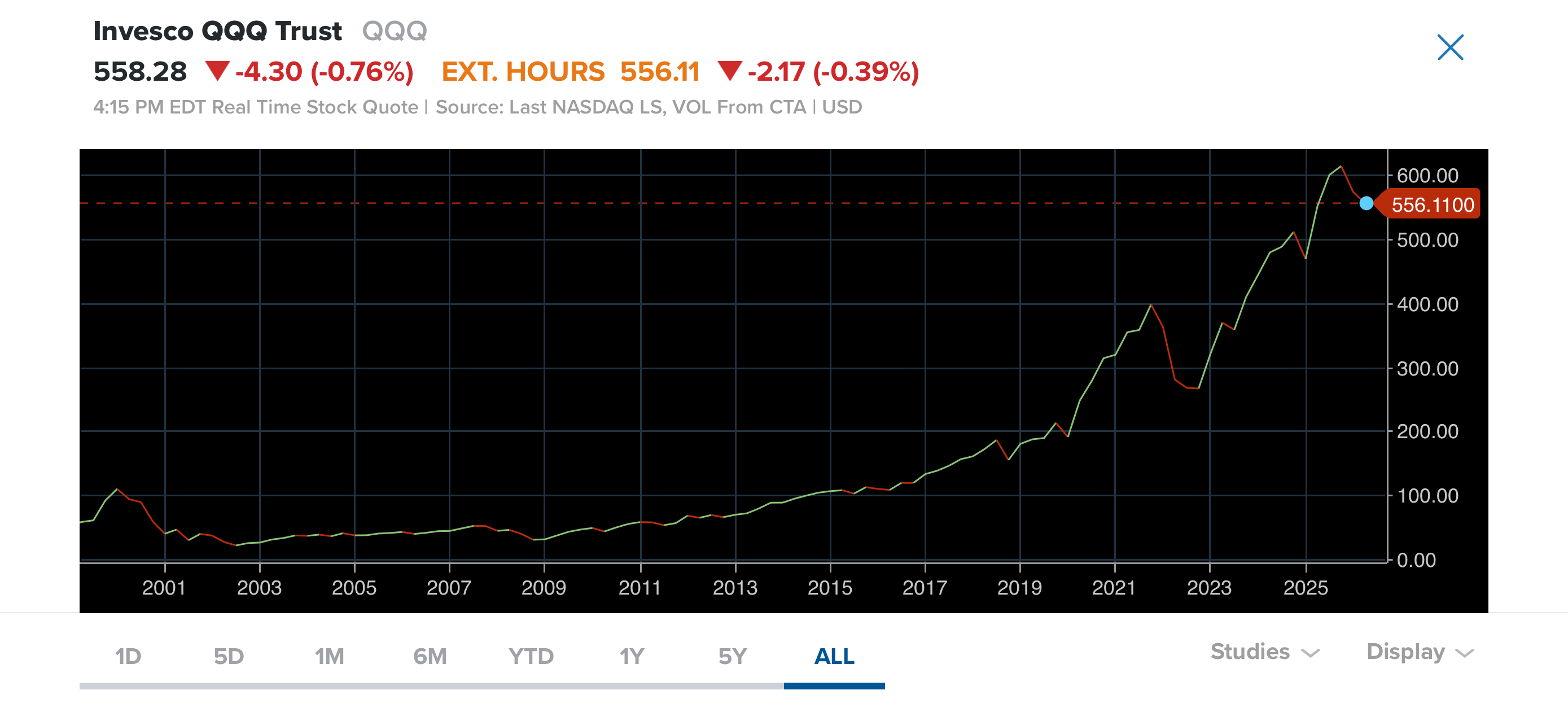
Historically, the U.S. stock market has come back to – and then taken out – its prior highs over time; future recovery is not certain. Whether it was the crash of 1987, the dot-com bust, the Great Financial Crisis, COVID, or last April’s tariff panic, every violent drawdown eventually became just another higher low on a long-term chart. Corrections, policy shocks, and “black swans” are not bugs; they are literally part of how the weighing machine works and reprices risk before marching higher again.

Behind all of the short term noise, beyond the headlines of the current narrative is the early stages of the greatest innovation boom since the early 1900’s. The Companies that solve the biggest problems will have the largest returns. At G.L.A INVE$T, we view the next ten years as the Super Bowl of Investing. Invest accordingly!

#2. Trying To Time The Market Is A Fool’s Errand
The So Called Pro’s?: the average hedge fund returned roughly 5% per year from 2011–2020, while the S&P 500 compounded at about 14.4% annually over the same period – almost 3x higher for simply owning the index and doing nothing. Missing just a handful of the best days each year can cut your long-term returns in half because those monster green days often show up right after the ugliest red ones.(Miss ten days miss half your gains)
Meanwhile, concentrated portfolio’s of the innovation leaders like FAANG – Facebook,Amazon, Apple, Netflix, and Google – generated roughly 25–26% annualized returns for buy-and-hold investors over the last 10 years, dwarfing both hedge funds and broad indices for those who stayed in their seats. Same thing happened with the MAG 7 from 2020-2025. The lesson is simple: You dont get exponential growth returns by trying to time the market or bye owning indexes. The G.L.A INVEST “Apex 10”is your huckleberry if you want exponential growth over the next 5 years.

3. The Finance Media Is Not Your Friend
Financial media runs on ad dollars, click-through rates, and engagement, not on your long-term financial freedom. “If it bleeds, it leads” isn’t just a saying; it’s the business model that pushes fear, urgency, and drama every time markets wobble. Wall Street Media and the so called “analysts’ want to keep retail investors buying and selling to generate fee’s, they want retail making emotional decisions and they want retail to think that investing is hard so they have to use a “professional”. Remember that your financial advisor is not incentivized to make you money, their Business model is to pretend they are doing magic, then return the same as the S&P500, all while collecting 1-2% a year with minimal work.
4. Know What You Own – Or You Will Get Shaken Out
This is why we are obsessed with knowing what we own and why we are so picky about which companies make it into our portfolios. We only want businesses we can see 10X–30X potential in over 5–10 years, with visionary founders, must-have products, massive TAMs, strong moats, and balance sheets that can survive the storm.
When you truly understand Tesla’s AI and robotics roadmap, Palantir’s role as the operating system for AI-driven enterprises and governments, or Bitcoin’s place in a world of fiscal and monetary chaos, volatility stops feeling like “risk” and starts feeling like “opportunity”. If you don’t know what you own, the next scary headline will talk you out of your future. If you do, you actually look forward to red days because you’re buying more of what you love on sale.

5. Volatility Is Here To Stay – and Its a Feature not a Bug
We are in the early innings of the largest innovation and productivity boom in human history, driven by AI, robotics, energy storage, blockchain, and next-wave compute – and that means massive disruption and creative destruction every year from here. Old business models will die violently; new ones will scale from zero to trillions faster than ever; regulatory shocks, geopolitical stress, and algorithmic trading will amplify every move. Volatility is not going away – it is the price of admission for exponential upside.
For investors focused on Infinite Innovation, this is actually good news. Volatility is our traveling companion and the mechanism that transfers wealth from impatient traders to patient owners who are dollar-cost averaging into category killers and letting compounding do the heavy lifting. We don’t fight volatility; we harness it with discipline, research, and conviction.

As you navigate this week’s noise, ask yourself one question: am I reacting to headlines, or am I executing a researched, long-term plan I truly believe in?
Also this is a great week to reevaluate our portfolios, consider selling the mutual funds to build our own mutual fund, no need to own the entire market, we need to own the best and forget the rest. (Not investment advice)
#6. The Trump Playbook Bull in a China Shop
Trump negotiates like my grandma would say, a bull in a china shop – shock and awe, loud threats, tariffs, and headlines that slam stocks in the short term. But underneath the chaos, he watches the market like a live approval rating and clearly ties his legacy to “record highs” and a strong economy.
Last April’s tariff scare was the blueprint: brutal selloff, terrified media, then a sharp rebound once the rhetoric softened and details came out. So when he charges again this week and the tape freaks out, remember his pattern and the market’s history: he doesn’t want to own a broken market. For long-term investors who know what they own, the translation is simple – ignore the drama, buy the dip.
